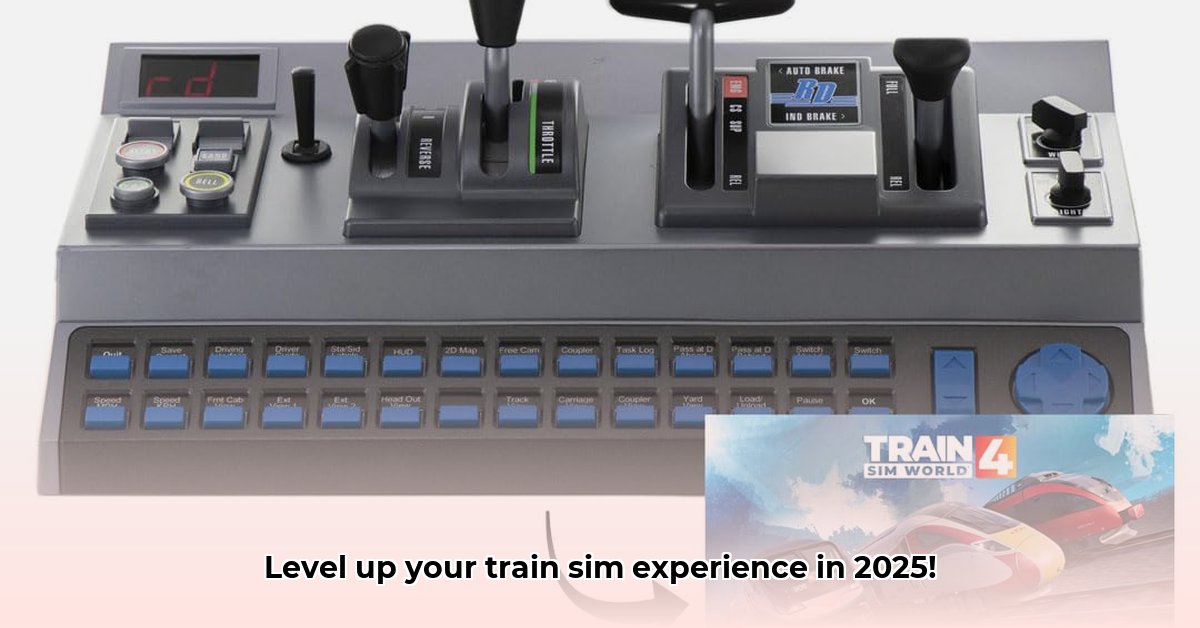
Ever dreamed of mastering the throttle and brakes of a colossal locomotive? The world of train simulation is booming, and the key to an immersive experience lies in the controller. Choosing the right one can feel overwhelming, but this guide simplifies the process, providing actionable advice for consumers, manufacturers, and retailers alike. We'll explore the market landscape, analyze leading controllers, and offer a step-by-step selection process. All aboard for a deeper dive into the exciting world of train simulation controllers!
Understanding the Train Sim Controller Market: A 2025 Perspective
The train simulation market is experiencing explosive growth, driven by increasingly realistic software and a growing community of enthusiasts. But, how do you navigate the diverse range of controllers available? This section provides a detailed market analysis to inform your decision.
The market is segmented by product type (basic joysticks, mid-range controllers, and professional setups), target audience (casual gamers to hardcore enthusiasts), and software compatibility (Train Simulator, Derail Valley, etc.). Key players like RailDriver and TS Controllers dominate the high-end segment, focusing on realism and advanced features, while numerous smaller manufacturers cater to niche needs and specialized builds.
A significant growth driver is the increasing realism of train simulation software. This increased realism necessitates higher-quality, more sophisticated controllers to provide a truly immersive experience. However, challenges remain. Balancing affordability with high-fidelity features requires innovative design and efficient supply chain management. Furthermore, maintaining software compatibility across evolving platforms demands constant adaptation from manufacturers. Is the market poised for even faster growth in 2026 and beyond? Only time will tell, but the trend points toward continued expansion.
Finding Your Perfect Controller: A Step-by-Step Guide
Choosing the right train sim controller is a crucial step toward enjoying the hobby. This section presents a structured approach to help you make an informed decision.
Step 1: Define Your Needs and Budget
Before diving into the market, establish your priorities. What's your budget? Are you a casual gamer or a serious enthusiast seeking maximum realism? Which simulation software do you intend to use? Understanding your needs will significantly narrow your options. For example, a casual player might find a basic joystick sufficient, while a serious simulator enthusiast may require a high-end setup, such as the professional level RailDriver.
Step 2: Key Features and Considerations
Consider these essential features:
- Throttle and Brakes: Precise, smooth control is vital. Look for controllers with responsive mechanisms.
- Additional Controls: Features like horn, bell, lights, and air brakes enhance immersion.
- Software Compatibility: Ensure compatibility with your software before purchasing.
- Ergonomics: Comfort is crucial for extended play sessions. Prioritize ergonomic design.
- Build Quality: A durable controller will withstand frequent use.
Step 3: Comparing Leading Controllers
The following table provides a hypothetical comparison of leading controllers. Note: Prices and specifications are illustrative and subject to change.
| Feature | RailDriver | TS Controllers | Budget Controller |
|---|---|---|---|
| Realism | Very High | High | Moderate |
| Price | Premium | Mid-range | Affordable |
| Durability | Excellent | Good | Good |
| Software Compat. | Broad | Often specific models | Generally wide |
| Additional Controls | Extensive | Several | Basic |
Step 4: Making Your Decision
Use the information gathered in the previous steps to compare controllers. Don't hesitate to read detailed reviews and compare user experiences. Remember, the “perfect” controller is subjective; prioritize your needs and preferences.
Step 5: Ongoing Considerations
The train simulation landscape is dynamic; new software and hardware releases are frequent. Remain updated on new releases and potential improvements in controller technology to ensure your choice remains relevant. With this ever-changing environment, how will you stay informed?
Advice for Manufacturers and Retailers: Strategies for Success
This section offers insights and strategies for manufacturers and retailers to thrive in this competitive market.
Manufacturers: Focus on innovation, particularly in haptic feedback, VR integration, and ergonomic design. Streamlining supply chains and addressing software compatibility across multiple platforms are also vital. Effective marketing that appeals to both casual and hardcore gamers is crucial for brand building and market penetration.
Retailers: Consider bundling controllers with popular software to enhance appeal. Building a supportive online community fosters brand loyalty and provides valuable feedback channels. Offering a range of controllers at various price points caters to diverse needs and budgets. Furthermore, providing detailed product information and reviews helps customers make informed choices and enhances the shopping experience.
Conclusion: The Future of Train Sim Controllers
The train simulation controller market is dynamic and full of potential. While challenges exist, manufacturers and retailers who prioritize innovation, supply chain efficiency, excellent customer service, and a strong online presence will be well-positioned to succeed. For consumers, selecting the right controller is a key step in enhancing their virtual railroading experience. Choosing wisely will lead you to countless hours of immersive fun and excitement! Remember to weigh your budget, desired realism, software compatibility, and desired level of immersion in the selection process. Happy railroading!
⭐⭐⭐⭐☆ (4.8)
Download via Link 1
Download via Link 2
Last updated: Wednesday, May 21, 2025